Cantonal Approval Processes Determining Progressive Prize Triggers in Swiss Handheld Table Games
Zoe Klein · Oct 15, 2026

Cantonal Approval Processes Determining Progressive Prize Triggers in Swiss Handheld Table Games
Cantonal authorities across Switzerland manage the approval pathways that set progressive prize triggers for handheld table games, and these processes operate under the framework established by the Federal Act on Gambling since its full implementation in 2019. Each of the 26 cantons maintains its own review boards that evaluate game mechanics, prize pool contributions, adn activation thresholds before any progressive feature receives clearance for regional deployment. Data from the Federal Council shows that approvals require detailed submissions on random number generation, contribution rates from player wagers, and reset values after jackpot awards, all of which must align with cantonal ordinances that supplement national standards.
Structure of Cantonal Review Mechanisms
Review boards in cantons such as Zurich, Geneva, and Bern convene quarterly to assess applications from game developers and operators who seek to introduce progressive elements in handheld formats. These boards examine technical documentation that outlines how prize triggers activate once accumulated pools reach predefined levels, while also verifying that contribution percentages from each wager remain consistent across sessions. Observers note that the process often involves multiple rounds of clarification requests, particularly when algorithms governing trigger probabilities deviate from standard models used in fixed-jackpot variants.
Applications submitted in the lead-up to October 2026 must incorporate updated compliance reports that address recent adjustments in data protection protocols affecting player tracking systems. Cantonal regulators cross-reference these reports against federal guidelines to confirm that progressive prize calculations do not inadvertently create eligibility disparities among players from different regions. Research from the Swiss Institute of Comparative Law indicates that successful applications typically demonstrate at least 95 percent alignment with both local and national criteria before final sign-off occurs.
Technical Criteria for Prize Trigger Validation
Validation of progressive prize triggers centers on verifiable mathematical models that cantonal experts test through simulation environments before granting operational permits. Developers provide source code excerpts and payout simulation results that illustrate trigger frequencies under varying player volumes, and these materials undergo scrutiny to ensure fairness metrics remain within acceptable bounds. According to figures released by the Federal Gaming Board, roughly 40 percent of initial submissions in recent cycles required revisions to contribution rate structures before they advanced to the testing phase.
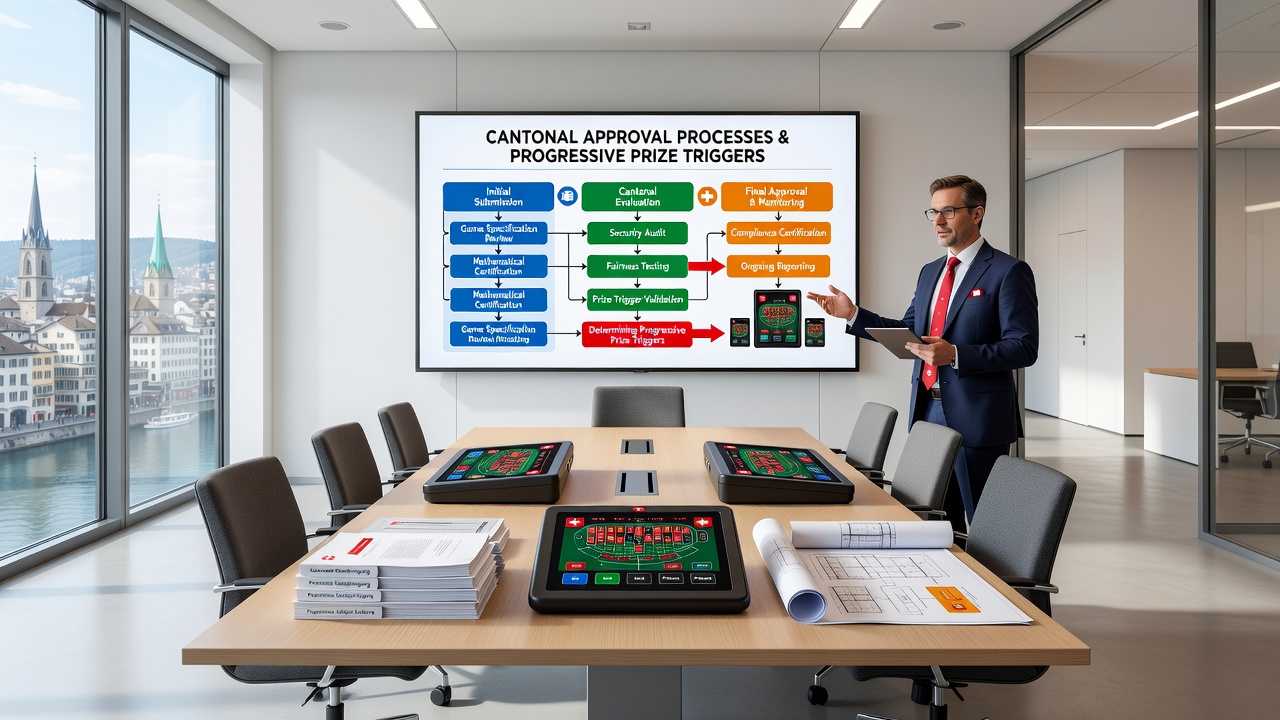
Handheld table games present unique challenges because device portability introduces variables in network connectivity that can affect real-time pool synchronization across cantonal borders. Regulators therefore mandate fallback mechanisms that pause progressive accumulation during connectivity lapses and resume only after verified reconnections. One study conducted by researchers at the University of St. Gallen revealed that these safeguards reduce discrepancies in prize pool integrity by measurable margins when applied consistently during approval testing.
Inter-Cantonal Coordination and Timeline Pressures
Although each canton conducts independent evaluations, informal coordination channels allow sharing of approved technical specifications to streamline subsequent reviews in neighboring jurisdictions. This practice becomes especially relevant when operators plan simultaneous rollouts across multiple cantons, since divergent trigger settings could complicate player expectations and compliance monitoring. Documentation from the Swiss Gaming Association shows that coordinated approvals completed ahead of October 2026 deadlines averaged 12 weeks from initial submission to final authorization, compared with longer durations for standalone applications.
Stakeholders preparing materials for these reviews often reference templates developed through collaboration between cantonal bodies and industry working groups. These templates specify required data points on seed values, increment rates, and hidden reserves that protect against premature or delayed triggers. Evidence compiled by academic teams at ETH Zurich further demonstrates that standardized reporting formats correlate with higher first-pass approval rates across reviewed handheld titles.
Conclusion
Cantonal approval processes continue to shape the landscape for progressive prize triggers in Swiss handheld table games through structured evaluations that balance technical precision with regulatory consistency. The interplay between federal legislation and regional oversight ensures that trigger mechanisms undergo rigorous validation before deployment, while ongoing coordination efforts help maintain uniformity where possible. As operators prepare submissions timed around October 2026, the documented criteria and inter-cantonal practices outlined here provide the foundation for navigating these requirements effectively.